
Artificial Intelligence • Physical AI & Robotics
Physical AI: The Convergence of Robotics and Artificial Intelligence in 2026
Large foundation models and vision-language-action architectures are moving beyond virtual chat into industrial machinery and autonomous factories. Inside the engineering breakthroughs, factory deployments, and regulatory battles defining embodied AI.
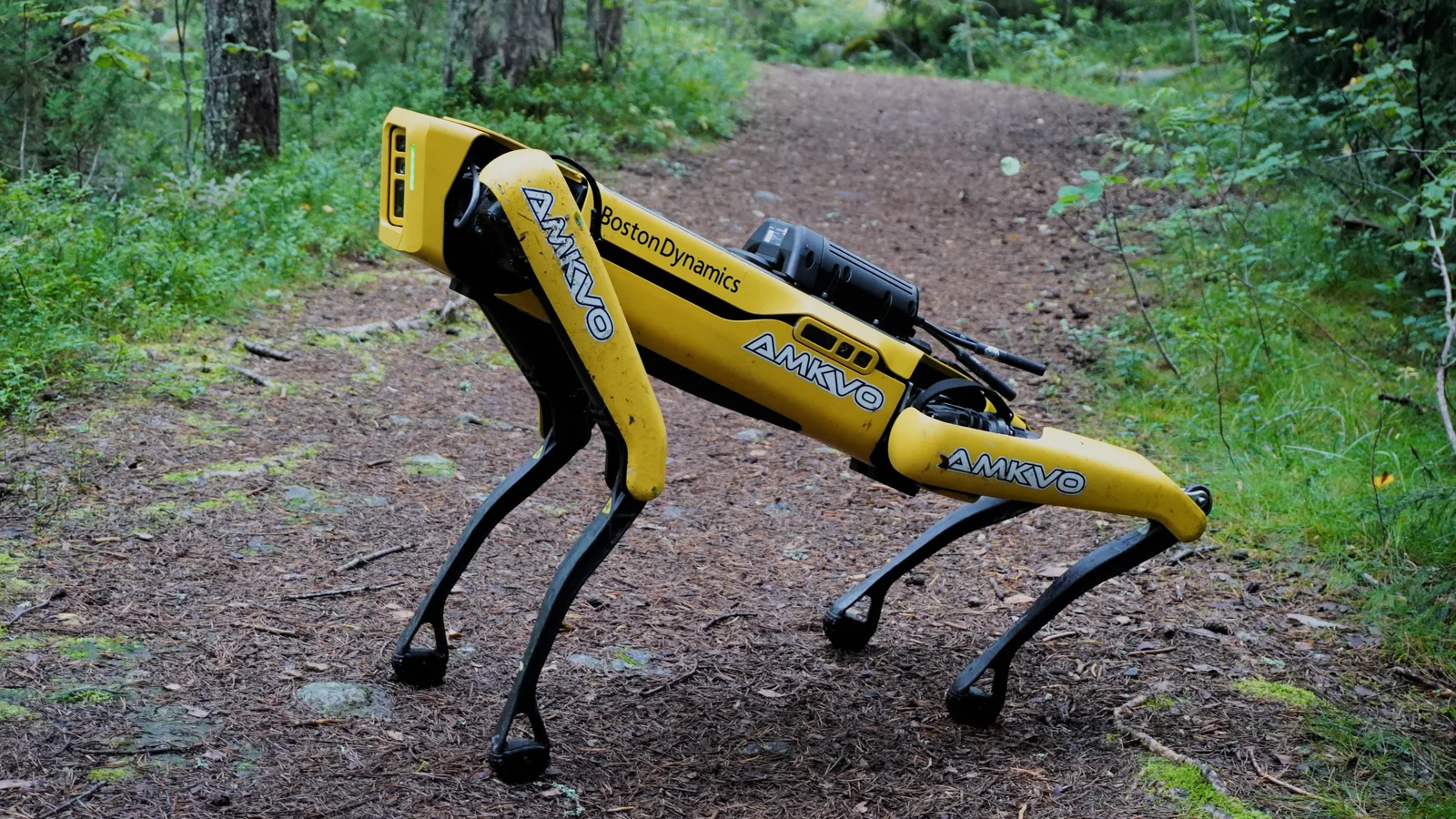
For three years, the generative artificial intelligence boom was primarily confined to data centers, browser windows, and software development pipelines. In 2026, artificial intelligence has definitively crossed the boundary into the physical world. The convergence of multimodal foundation models, high-speed spatial perception, and robotic actuation has created what roboticists term "physical AI": machines that observe, reason about, and physically alter their three-dimensional surroundings in real time.
This transition represents a fundamental paradigm shift for industrial automation. Traditional factory robots were rigid, pre-programmed automatons confined behind safety fences, executing precise trajectories but incapable of adapting if a component deviated by a few millimeters. Physical AI replaces hard-coded routines with Vision-Language-Action (VLA) foundation models trained across millions of simulated hours and real-world trials, enabling machines to interpret natural language commands, generalize across diverse objects, and correct errors autonomously.
"The initial phase of robotics conquered basic kinematic mobility and precision. The physical AI era is solving the far more difficult challenge of situational reasoning and physical common sense."
Architectural Breakthroughs: Vision-Language-Action Models
The technological catalyst enabling physical AI is the rapid evolution of Vision-Language-Action architectures. Systems such as Google DeepMind's Gemini Robotics ER2 model function as high-level cognitive controllers for robotic hardware. Rather than outputting conversational text or computer code, VLA models process streaming video feeds alongside sensory telemetry, generating direct joint torque instructions and high-level trajectory plans.
Crucially, compute dedicated to robotic simulation and policy training has expanded more than 1,000-fold since 2018. Physics simulators and digital twins allow robotic agents to practice grasping, palletizing, and assembly millions of times in virtual environments before running on physical hardware. Techniques like domain randomization, which inject unpredictable variations in friction, lighting, and object geometry during simulation, ensure that neural control policies transfer reliably into physical factory environments without extensive manual tuning.
Simultaneously, specialized silicon is advancing to support on-device inference. In aerospace, NASA's Jet Propulsion Laboratory and Microchip developed a radiation-hardened System-on-a-Chip offering up to 500 times the computational throughput of previous spaceflight processors. This palm-sized unit enables autonomous deep-space rovers and orbital servicing drones to execute real-time hazard avoidance and geological sample analysis without waiting for round-trip radio signals from Earth.
Industrial Adoption: Warehouses, Automotive Plants, and Self-Driving Labs
The commercial deployment of physical AI is progressing at record scale. According to the International Federation of Robotics (IFR), the worldwide operational stock of industrial robots reached 4.66 million units in 2024, with annual installations setting a historic record of over 542,000 units. Asia remains the primary engine of adoption, accounting for 74 percent of all newly installed industrial robots, led by rapid automation in Chinese automotive and electronics fabrication.
| Sector / Application | Operating Organization | Physical AI System | Documented Performance Metric |
|---|---|---|---|
| Warehouse Logistics | DHL Supply Chain | Boston Dynamics Stretch | 1,000+ units ordered; achieves up to 700 cases per hour unloading |
| Automotive Manufacturing | Global Assembly Facilities | Boston Dynamics Atlas / Cobots | 4.66M global industrial robot stock; 542,000 annual installations |
| Materials Discovery | Argonne National Laboratory | Polybot Autonomous Lab | Shrinks research cycle times from years to months; 90% cost drop |
| Deep-Space Autonomy | NASA / JPL | High-Performance Spaceflight Chip | Delivers 100x to 500x compute increase for real-time robotic vision |
In supply chain logistics, automated mobile robots have moved beyond simple corridor transport. Boston Dynamics' Stretch robot, designed for autonomous truck and container unloading, achieves sustained throughput of up to 700 carton boxes per hour. Following extensive pilot testing, DHL Supply Chain ordered more than 1,000 Stretch units to automate package unloading across its international hub network.
In scientific research, physical AI has established autonomous "self-driving laboratories." At the U.S. Department of Energy's Argonne National Laboratory, the Polybot robotic synthesis platform combines liquid-handling robotic arms with active machine learning. Polybot autonomously designs chemical experiments, mixes precursor solutions, analyzes the resulting materials, and updates its predictive models without human intervention, compressing scientific discovery timelines from years down to months.
Milestones in the Physical AI Evolution (2023 to 2026)
The rapid convergence of robotics and machine intelligence has unfolded across a sequence of breakthrough deployments and regulatory actions:
| Year | Milestone | Domain | Significance |
|---|---|---|---|
| 2023 | Argonne Polybot Launch | Autonomous scientific R&D | Demonstrates closed-loop machine-learning materials synthesis. |
| 2024 | EU AI Act Adoption | Global regulatory policy | Establishes statutory risk tiers covering autonomous machinery. |
| 2025 | IFR Installation Record | Global industrial manufacturing | 542,000 new robots installed; operational fleet hits 4.66 million. |
| 2026 | Atlas Factory Pilot Deployment | Humanoid factory robotics | Boston Dynamics deploys electric Atlas into automotive production. |
| 2026 | DeepMind Gemini Robotics ER2 | Multimodal VLA foundation models | Enables high-level spatial reasoning and tool calling in physical machines. |
Global Policy and Safety Governance: The EU AI Act vs. US Market Pragmatism
As autonomous physical agents enter public spaces, logistics yards, and factory floors, regulatory authorities are establishing binding compliance regimes.
The European Union has codified the world's most stringent regulatory regime under the EU Artificial Intelligence Act. Fully applicable by August 2026, the regulation adopts a technology-neutral, risk-stratified architecture. Physical AI systems integrated into critical infrastructure, medical devices, or autonomous industrial transport are classified as high-risk. Manufacturers must satisfy strict statutory obligations, including deterministic fail-safe mechanisms, verifiable training data quality, continuous human oversight, and mandatory cybersecurity conformity assessments.
In contrast, the United States maintains a decentralized, sectoral governance model. While federal agencies issue voluntary risk-management frameworks under the National Institute of Standards and Technology (NIST), mandatory regulations remain fragmented across individual state statutes in California, Colorado, and New York. This regulatory divergence presents multinational robotics manufacturers with differing compliance requirements between European conformity mandates and American market standards.
Concurrently, industry leaders are addressing weaponization concerns. Several major robotics manufacturers, including Boston Dynamics, have signed binding commercial commitments pledging never to weaponize their mobile robotic platforms. However, escalating geopolitical competition has accelerated state-funded research into autonomous reconnaissance drones and battlefield logistics systems, intensifying the urgency of international arms-control discussions.
The Editorial Perspective
The narrative surrounding robotics has fundamentally changed. The long-standing belief that robots would remain confined to repetitive automotive welding while software automated knowledge work has been overturned.
In 2026, intelligence and physical embodiment are converging. As Vision-Language-Action models mature, the physical world is becoming computational space. The organizations that lead the next economic decade will not merely be those with the largest cloud data centers, but those that master the complex physical interface where digital reasoning meets mechanical execution.
References & Empirical Documentation
- • International Federation of Robotics (IFR), World Robotics 2025: Industrial Robots and Global Factory Automation, 2025.
- • Google DeepMind Research, Gemini Robotics ER2: Spatial Reasoning and Multimodal Action in Physical Agents, July 2026.
- • Boston Dynamics Corporation, Industrial Logistics Automation and Factory Deployment Milestones, 2026.
- • European Parliament and Council, Regulation (EU) 2024/1689: The Artificial Intelligence Act, Official Journal of the European Union, 2024.
- • NASA Jet Propulsion Laboratory (JPL), High-Performance Spaceflight Computing System-on-a-Chip Architecture, May 2026.
- • Argonne National Laboratory, Polybot: Autonomous Synthesis and Closed-Loop Materials Discovery, U.S. Department of Energy, 2023.