
Neuroscience • Cognitive Longevity
Neuroenhancement and Cognitive Longevity: The New Frontier in Brain Health
From off-label wakefulness agents and clinical neuromodulation to senolytics and multimodal lifestyle trials. Examining what empirical neuroscience says about extending human cognitive healthspan.
Human life expectancy has expanded dramatically over the past century, yet cognitive longevity has failed to keep pace. By 2050, more than one in five individuals in developed economies will be aged sixty-five or older. Because chronological age remains the single strongest risk factor for neurodegenerative disease, maintaining memory, processing speed, and executive function has become a defining public health objective.
In response, a burgeoning ecosystem of pharmacological nootropics, transcranial neuromodulation devices, and longevity therapeutics has emerged. While popular media frequently conflates speculative silicon-valley biohacking with validated medicine, rigorous clinical trials conducted over the past five years offer a much clearer picture. The empirical evidence reveals that meaningful cognitive preservation is achievable, but primarily through vascular maintenance and multimodal lifestyle protocols rather than miracle pills.
"The most powerful cognitive enhancer discovered to date is not a designer molecule or a neural implant, but the rigorous clinical maintenance of cardiovascular parameters and cerebral perfusion."
Pharmacological Interventions: Stimulants, Nootropics, and Longevity Compounds
The pharmaceutical quest for cognitive enhancement divides into two distinct categories: prescription psychoactive compounds diverted for off-label performance, and novel molecular therapeutics designed to alter cellular aging pathways.
Prescription stimulants, such as methylphenidate and mixed amphetamine salts, as well as wakefulness promoters like modafinil, are approved specifically for conditions including attention-deficit/hyperactivity disorder and narcolepsy. While healthy individuals frequently take these compounds to improve academic or professional stamina, double-blind trials demonstrate that their cognitive benefits are narrowly circumscribed. Modafinil enhances alertness and simple vigilance in sleep-deprived subjects, but produces negligible improvements in complex reasoning or creative problem-solving in well-rested adults. Furthermore, chronic use carries cardiovascular risks, sleep architecture disruption, and psychological dependency.
In the over-the-counter dietary supplement market, substances marketed as botanical nootropics (including Ginkgo biloba, Bacopa monnieri, and various choline formulations) lack consistent replication in well-powered, randomized clinical trials. A comprehensive review by the United Kingdom Office for Product Safety and Standards concluded that no dietary supplement product currently satisfies the strict evidentiary standards of a true nootropic. Regulators have repeatedly flagged retail formulations for undeclared pharmaceutical adulterants and heavy metal contamination.
| Candidate Agent | Biochemical Mechanism | Clinical Trial Status | Observed Cognitive Effect | Key Safety Constraints |
|---|---|---|---|---|
| Modafinil | Dopamine reuptake inhibition, orexin signaling | FDA Approved (Narcolepsy) | Sustained vigilance under sleep loss; minimal gain well-rested | Insomnia, tachycardia, dependency risk |
| Rapamycin (Sirolimus) | mTOR complex 1 (mTORC1) inhibition | Phase I / II Trials (MCI) | Zero human cognitive gain in short-term pilot evaluations | Immunosuppression, metabolic dysregulation |
| Senolytics (Dasatinib + Quercetin) | Selective clearance of senescent cells | Early Human Trials | Reduces neuroinflammation; cognitive outcome pending | Off-target cytotoxicity, transient cytopenia |
| Metformin | AMPK activation, mitochondrial modulation | TAME Trial Ongoing | Observational correlation with lower dementia incidence | Vitamin B12 deficiency, gastrointestinal upset |
In the longevity arena, researchers are testing systemic anti-aging compounds for direct neuroprotective efficacy. Rapamycin (sirolimus), which reliably extends lifespan in invertebrate and rodent models by suppressing mTOR signaling, faced an important reality check in human trials. A 2025 Phase I randomized trial in patients aged 55 to 85 with mild cognitive impairment demonstrated that eight weeks of oral rapamycin achieved negligible penetration into cerebrospinal fluid and produced zero detectable cognitive improvements. While systemic mTOR modulation remains an active research path, translating animal longevity data into human cerebral rejuvenation requires overcoming blood-brain barrier dynamics and managing immunosuppressive toxicity.
Neuromodulation: Non-Invasive Stimulation and Neural Interfaces
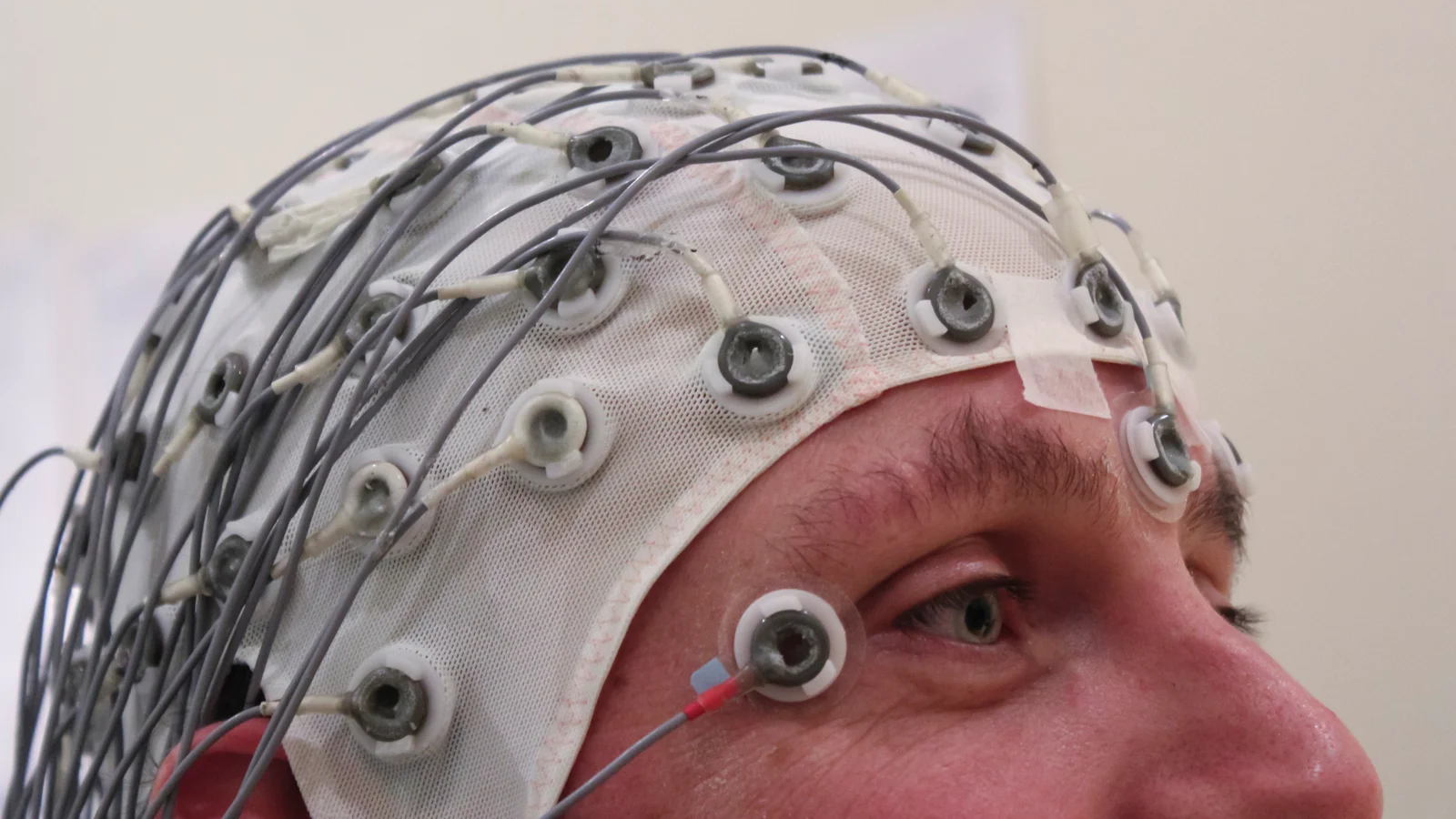
A parallel technological path involves directly modulating neural circuitry using electromagnetic or acoustic energy. Transcranial magnetic stimulation (TMS) and transcranial direct-current stimulation (tDCS) temporarily alter cortical excitability by delivering focused magnetic pulses or low-amplitude electrical currents to targeted scalp coordinates.
While high-frequency TMS has earned regulatory clearance for treatment-resistant major depression, its application for cognitive enhancement in healthy populations yields variable outcomes. Laboratory trials using tDCS over the dorsolateral prefrontal cortex have documented temporary working memory improvements of 10 to 15 percent. However, systematic meta-analyses reveal that these gains are short-lived, highly sensitive to individual skull anatomy, and frequently compromised by inadequate double-blind sham controls.
On the invasive frontier, intracortical brain-computer interfaces (BCIs) pioneered by academic medical centers and commercial ventures are establishing remarkable clinical milestones. Implanted multi-electrode arrays can decode intended motor cortex activity with over 90 percent accuracy, restoring text communication and prosthetic manipulation for paralyzed individuals. Expanding these technologies into cognitive augmentation for healthy populations remains constrained by surgical risks, neuroinflammatory tissue encapsulation, and profound bioethical dilemmas regarding cognitive liberty and mental privacy.
The Gold Standard: Multimodal Lifestyle Protocols and Vascular Control
In contrast to the equivocal evidence surrounding cognitive pharmaceuticals and electrical devices, large-scale randomized controlled trials evaluating multimodal lifestyle interventions have produced verifiable, durable results.
The landmark Finnish Geriatric Intervention Study to Prevent Cognitive Impairment and Disability (FINGER) demonstrated that a two-year coordinated program combining structured aerobic exercise, Mediterranean-style dietary counseling, computerized cognitive training, and active management of metabolic and vascular risk factors significantly reduced the rate of cognitive decline compared to standard healthcare advice. Subsequent international replications under the World-Wide FINGERS consortium have confirmed that targeting multiple interconnected risk factors simultaneously yields protective effects superior to any isolated mono-therapy.
Equally decisive was the National Institutes of Health's SPRINT-MIND trial. By randomizing over 9,000 hypertensive adults to either standard systolic blood pressure control (target below 140 mm Hg) or intensive control (target below 120 mm Hg), researchers observed a 19 percent reduction in the rate of new mild cognitive impairment cases in the intensive treatment group. Magnetic resonance imaging sub-studies confirmed that intensive pressure reduction preserved cerebral white matter integrity, definitively proving that cerebrovascular protection is the foundation of cognitive longevity.
| Year | Research Milestone | Scientific Focus | Core Clinical Finding |
|---|---|---|---|
| 2015 | FINGER Trial Publication | Multimodal lifestyle intervention | Combined diet, exercise, and brain training slows decline by 30%. |
| 2019 | SPRINT-MIND Trial Completion | Intensive vascular blood pressure control | Targeting systolic < 120 mmHg reduces mild cognitive impairment incidence by 19%. |
| 2021 | Human Intracortical Decoding | Invasive brain-computer interfaces | Direct neural decoding achieves high-accuracy motor intent translation. |
| 2023 | COSMOS Multivitamin Trial | Micronutrient supplementation | Daily multivitamin produces modest, measurable memory preservation in older adults. |
| 2025 | Phase I Rapamycin Dementia Pilot | Pharmacological mTOR inhibition | Confirms safety but demonstrates negligible CSF penetrance and zero cognitive gain. |
Bioethics, Pediatric Safeguards, and Regulatory Gaps
As neurotechnological tools become commercialized, regulators face acute ethical questions regarding safety, consent, and societal equity.
- Supplements Regulatory Blindspot: In major markets, dietary supplements operate under post-market regulatory frameworks that do not require pre-market efficacy validation. Mandatory clinical substantiation must be codified to protect vulnerable consumers from fraudulent memory cures.
- Pediatric Contraindication: Applying non-invasive transcranial stimulation or unvetted nootropics to children and adolescents presents severe developmental risks. Developing neural networks possess heightened neuroplastic sensitivity, making unmonitored home stimulation potentially disruptive to synaptic pruning.
- Neural Data Privacy: High-bandwidth consumer EEG headbands and invasive BCIs harvest continuous biological data. Governments must establish cognitive privacy frameworks ensuring neural signatures are not weaponized for behavioral profiling, insurance discrimination, or workplace surveillance.
- Equitable Access: If verified disease-modifying longevity therapies emerge, public health systems must ensure distribution is grounded in medical necessity rather than wealth, preventing structural cognitive divides between socio-economic classes.
The Editorial Perspective
The pursuit of cognitive longevity will undoubtedly remain a defining frontier of biomedical science. Yet the most credible roadmap for brain health does not require waiting for speculative cybernetic implants or synthetic nootropics.
The clinical evidence is clear: maintaining strict vascular control, engaging in daily aerobic exercise, eating a nutrient-dense whole-food diet, protecting deep sleep, and fostering continuous mental learning remain the most effective interventions known to medical science. Investing in these foundational disciplines preserves the neural architecture today while clinical researchers work to translate cellular longevity discoveries into the validated therapies of tomorrow.
References & Empirical Documentation
- • Kivipelto, M. et al., A 2-Year Multidomain Intervention of Diet, Exercise, Cognitive Training, and Vascular Risk Monitoring (FINGER), The Lancet, 2015.
- • The SPRINT Research Group, Association of Intensive vs Standard Blood-Pressure Control With Dementia and Cognitive Impairment (SPRINT-MIND), JAMA, 2019.
- • Jangwan, N.S. et al., Brain Augmentation and Neuroscience Technologies: Current Applications, Challenges, and Ethics, Frontiers in Systems Neuroscience, 2022.
- • National Institute on Aging (NIA), Cognitive Health and Older Adults: Research Evidence and Clinical Guidance, 2024.
- • Lauren, E.M.P. et al., Rapamycin Treatment for Alzheimer's Disease and Related Dementias: A Pilot Phase 1 Clinical Trial, Communications Medicine, 2025.
- • UK Office for Product Safety & Standards, Evidence Review: Nootropic Ingredients and Dietary Supplements, 2023.