
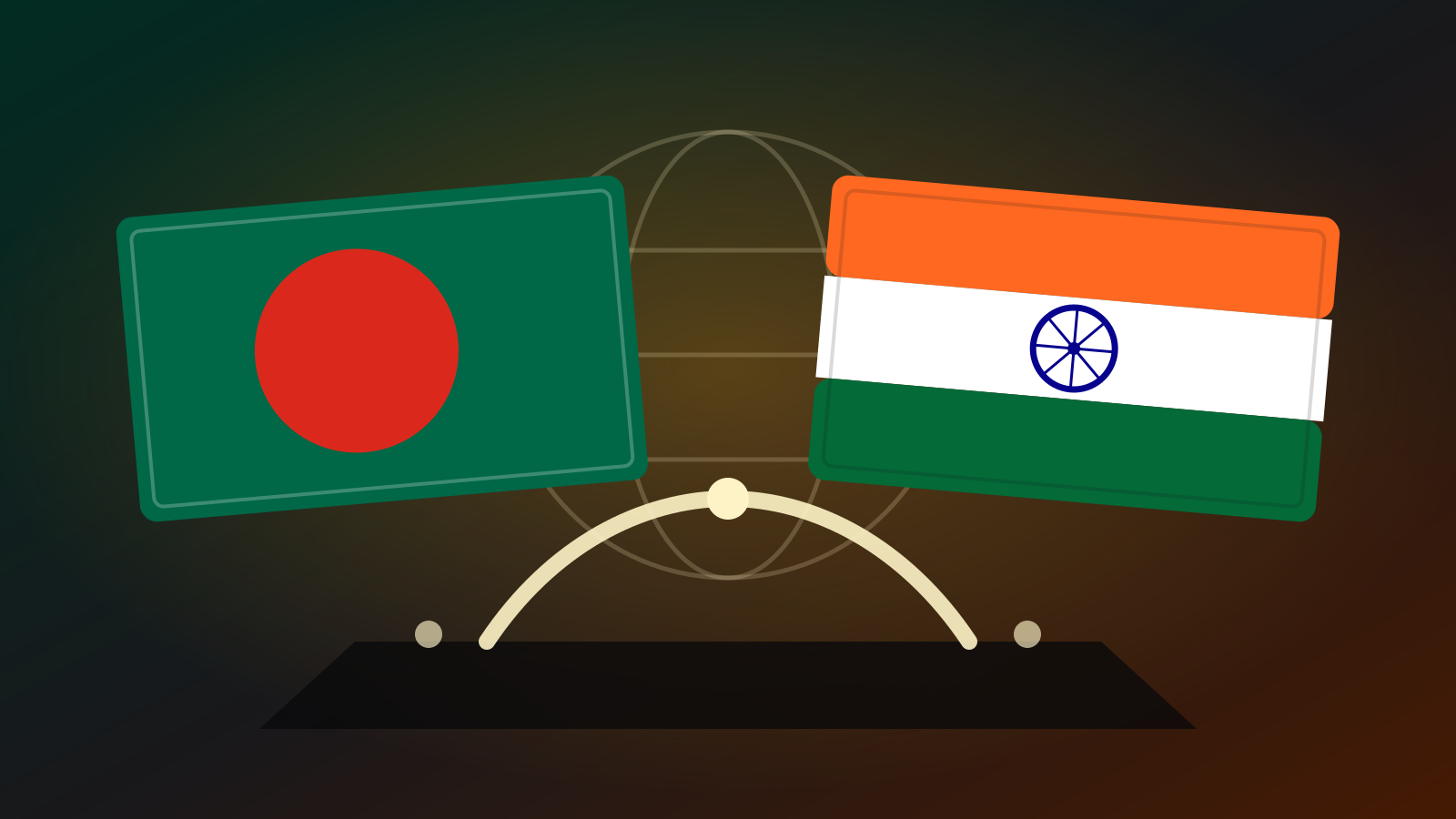
Bangladesh and BRICS 2026: Why Dhaka Stayed Away From the New Delhi Summit
Bangladesh's absence was about diplomatic capacity, not simply the existence of an invitation
The 18th BRICS Summit opened in New Delhi on 12 September and continued on 13 September 2026 under India's chairmanship. India's official summit material described the presidency theme as "Building for Resilience, Innovation, Cooperation and Sustainability" and brought together member states, partners and invited outreach participants.
Bangladesh was not represented. The immediate explanation from Dhaka was unusually explicit. State Minister for Foreign Affairs Humaiun Kobir said that Prime Minister Tarique Rahman had not been invited as prime minister of Bangladesh; India's outreach invitation was connected instead to his position as chair of BIMSTEC. The Daily Star reported Kobir saying simply: "Our prime minister was not invited."
India's interpretation was not that Bangladesh had been excluded altogether. Earlier reporting showed that New Delhi had invited Tarique Rahman to the BRICS outreach programme in his capacity as BIMSTEC chair, while a separate invitation for a bilateral India visit had also been discussed. Bangladesh's High Commissioner in New Delhi later cautioned that the non-attendance was "not a straightforward rejection", saying circumstances and diplomatic context had shaped the decision.
The accurate headline, therefore, is that Dhaka stayed away after the two governments framed the invitation differently.
Where Bangladesh actually stands in the BRICS architecture
Confusion is understandable because "BRICS" now describes several overlapping structures. Bangladesh has been a shareholder/member of the New Development Bank (NDB) since 2021, but NDB membership does not make a country a BRICS member. The BRICS forum and its development bank have separate membership arrangements.
Official BRICS material lists the bloc's expanded membership separately from a category of partner countries, whose representatives can take part in specified meetings and political consultations without becoming full members. Admission and expansion decisions operate by consensus among BRICS members.
| Category in September 2026 | Bangladesh's status | Why it matters |
|---|---|---|
| Full BRICS member | No | Bangladesh does not participate in full-member decision-making |
| BRICS partner country | No | It lacks the formalised access accorded to recognised partners |
| New Development Bank member | Yes, since 2021 | Bangladesh can engage financially with the BRICS-created bank |
| 2026 outreach participant | Invitation linked to BIMSTEC | Explains why an invitation existed without Bangladesh being represented |
Official BRICS documents show that Bangladesh appeared in discussions surrounding the partner-country expansion process, but the final set of countries that obtained partner status did not include Bangladesh. That distinction is important because past Bangladeshi expressions of interest are sometimes inaccurately described online as if membership had already been secured.
Why Dhaka may have preferred a separate India visit
Bangladeshi officials indicated that Tarique Rahman's first visit to India as prime minister carried bilateral significance of its own. Kobir argued that it would not be ideal for that first trip to occur primarily inside a multilateral event, while saying a bilateral visit could be organised when conditions were suitable.
That explanation suggests protocol and political signalling were at least as important as BRICS itself. A bilateral visit provides dedicated meetings, an agreed agenda and more control over public messaging. Attendance at an outreach session, by contrast, could have placed Bangladesh among a wider group of invitees without resolving bilateral issues on Dhaka's preferred terms. This interpretation is an inference from the officials' explanations rather than a formally published Bangladeshi foreign-policy doctrine.
What Bangladesh missed at New Delhi
The 2026 summit was substantive. BRICS leaders adopted the New Delhi Declaration, voicing concern about unilateral tariff and non-tariff measures, calling for diplomatic approaches to international conflicts and supporting deeper cooperation in areas including local-currency trade, payment systems, health, agriculture, technology and artificial intelligence.
India also used its chairmanship to advance practical initiatives in digital agriculture, agroecology, supply-chain cooperation, research, health and related areas. For Bangladesh—a major garment exporter, climate-vulnerable economy and NDB member—the economic and development conversations are clearly relevant even without BRICS membership.
Yet staying away from one outreach meeting does not amount to a permanent strategic break. Bangladesh can continue NDB participation, bilateral relationships with individual BRICS states and future discussions about partner or member status. The key analytical distinction is between financial participation, diplomatic outreach and formal membership.
For Dhaka, the longer-term question is less whether it appeared in a summit photograph in 2026 and more what form of BRICS engagement would advance trade, development finance and strategic autonomy without creating unnecessary friction in its other international relationships.
References & Archival Documentation
- • Official BRICS 2026 India portal, summit proceedings and New Delhi outcomes.
- • Official BRICS documentation on membership structure and partner-country designations.
- • New Development Bank (NDB) governance records regarding Bangladesh shareholder membership.
- • The Daily Star, official Bangladesh government briefing regarding summit attendance.
- • The Business Standard, diplomatic analysis and High Commissioner M Riaz Hamidullah commentary.
- • Reuters and Associated Press, New Delhi Declaration adoption, September 12–13, 2026.