Energy • Power Infrastructure
AI's Power Grab: How Data Centres Turned Electricity into the Defining Tech Constraint
Hyperscale computing campuses are colliding with legacy utility grids, triggering multi-gigawatt nuclear power contracts and legislative battles over consumer utility rates.
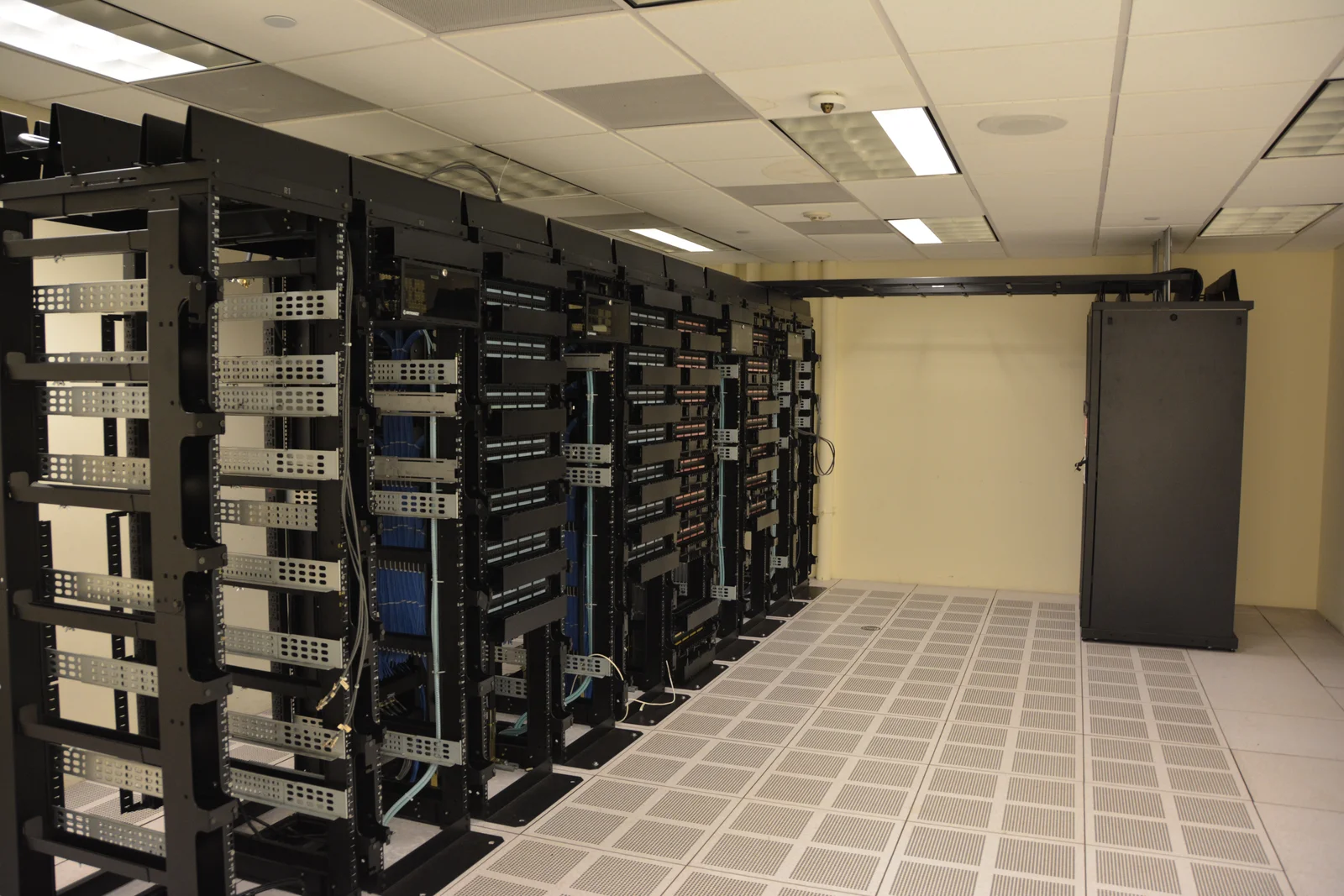
The defining technology question of 2026 is no longer which laboratory possesses the highest-performing neural architecture, the fastest accelerator, or the most expansive software ecosystem. It is whether technology firms and sovereign states can secure sufficient electric power, high-voltage substations, cooling reservoirs, power transformers, gas turbines, grid interconnections, and community approvals to operate frontier computing clusters.
The sheer financial magnitude of this infrastructure wave is unprecedented. The International Energy Agency (IEA) reports that capital expenditure by leading technology conglomerates exceeded 400 billion dollars in 2025 and is projected to expand by an additional 75 percent in 2026. Capital spending by just five major technology firms now surpasses global capital expenditures for upstream oil and natural gas extraction. Microsoft alone plans to expand its global data center capacity from roughly 12 gigawatts today to 38 GW by 2032, projecting annual capital outlays of 175 billion dollars.
Electricity consumption is tracking this capital surge. Global data-center electricity consumption grew 17 percent in 2025, while power demand at dedicated artificial intelligence facilities jumped 50 percent. The IEA projects that total data-center electricity use will nearly double from 485 terawatt-hours in 2025 to 950 TWh by 2030, representing roughly 3 percent of entire global electrical demand. AI-dedicated facilities will triple their consumption across the same window.
"Efficiency gains are staggering: power consumption per individual compute query falls by an order of magnitude annually. Yet the rebound effect is relentless. Advanced reasoning, high-definition video generation, and autonomous agent loops consume thousands of times more energy per query than simple text models, driving aggregate demand higher."
Power Density and the Substation Bottleneck
In addition to total power volume, artificial intelligence has fundamentally altered the physical concentration of electrical demand. The IEA calculates that AI server power density increased eleven-fold between 2020 and 2025, with expectations of an additional four-fold increase by 2027. By that point, a single high-density server rack (occupying the physical footprint of a home refrigerator) can reach peak electrical demand equivalent to 65 residential households.
This density shifts the core engineering bottleneck from the computer room to the high-voltage substation. In the United States, PJM Interconnection, the regional transmission organization coordinating power across thirteen states and 67 million residents, projects that data centers will add approximately 30 gigawatts of load by 2030. PJM's 15-year summer peak demand forecast was revised upward by 70 GW to reach 220 GW, primarily driven by computing infrastructure.
The resulting friction has reached federal politics. In September 2026, the United States House of Representatives prepared to debate the bipartisan Ratepayer Protection Act, legislation intended to shield residential consumers from bearing the capital costs of high-voltage transmission lines constructed to serve commercial server facilities. Regulators face mounting public pressure to guarantee that private infrastructure expansions do not inflate ordinary utility bills.
| Power Resource | Primary Hyperscaler Commitments | Deployment Horizon | Strategic Trade-offs |
|---|---|---|---|
| Nuclear Restarts & Uprates | Microsoft (Three Mile Island Unit 1 / Crane), Google (Duane Arnold) | 2028-2029 | Firm 24/7 carbon-free electricity; strictly limited by decommissioned plant inventory |
| Advanced SMRs | Meta (TerraPower Natrium 2.8 GW, Oklo 1.2 GW), Google (Kairos 500 MW) | 2030-2035 | High energy density; first-of-a-kind licensing and supply chain delays |
| Onsite Natural Gas | 15-27 GW pipeline under developer review across US hubs | 2026-2028 | Bypasses grid queues; faces turbine delivery shortages and emissions penalties |
| Utility-Scale Batteries | 20-25 GW projected colocation at major data hubs | 2026-2030 | Buffers rapid training load swings; limited duration for continuous outages |
The Nuclear Renaissance Meets Reality
The most remarkable strategic pivot of the AI boom has been the tech sector's large-scale embrace of commercial nuclear generation. Nuclear energy offers continuous baseload output, zero direct operational carbon emissions, and predictable multi-decade operating economics.
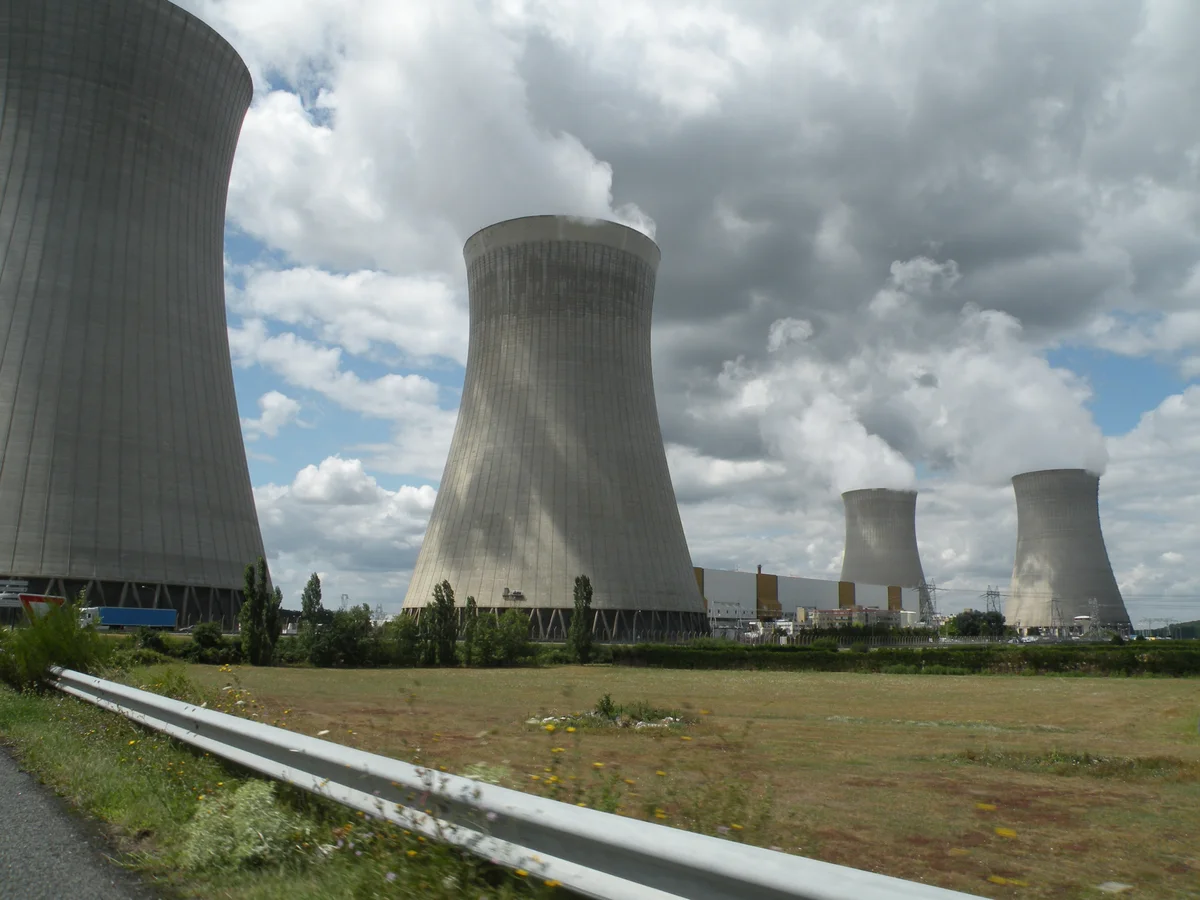
Meta concluded agreements across 2026 with Vistra, TerraPower, and Oklo supporting up to 6.6 GW of nuclear capacity by 2035. Its TerraPower partnership encompasses two Natrium sodium-cooled fast reactors delivering 690 megawatts, with options extending to an eight-unit 2.8 GW complex integrated with 1.2 GW of thermal storage. Google executed agreements with Kairos Power and the Tennessee Valley Authority to deploy 500 MW of molten-salt reactors, alongside partnering with NextEra to recommission Iowa's 600 MW Duane Arnold nuclear plant by 2029. Microsoft contracted Constellation to restart Unit 1 of Three Mile Island (renamed the Crane Clean Energy Center) under a twenty-year power-purchase commitment.
However, nuclear power cannot serve as an immediate remedy for the deficits of the 2020s. Advanced small modular reactors will not achieve commercial scale until the early 2030s. The practical interim response remains a pragmatic portfolio: utility-scale solar and wind supply nearly half of near-term data center load additions, while natural gas and battery storage bridge reliability intervals.
Water Stewardship and Local Social Licence
Beyond electricity, water consumption has emerged as a major flashpoint. A United Nations University assessment projected that data-center water and electricity usage could both double by 2030. While cloud operators have achieved major efficiency improvements (AWS reported reducing its water usage effectiveness to 0.12 liters per kilowatt-hour of IT load, while Google replenished 7.7 billion gallons of freshwater in 2025), localized community opposition is growing.
A volume of water conserved in one river basin does not alleviate acute drought stress in an arid metropolitan district hosting a new server cluster. In response, modern designs are increasingly adopting closed-loop direct-to-chip liquid cooling and industrial desalination, as demonstrated by Meta's 168 MW facility in Jamnagar, India, constructed in partnership with Reliance.
The Verdict: Energy Governance Dictates Compute Scale
Artificial intelligence is effectively industrializing software. Previous generations of web and mobile software scaled globally while their physical electrical footprint remained unobtrusive. Frontier artificial intelligence operates by an entirely different physical logic: scaling intelligence requires expanding electrical generation, high-voltage transformers, cooling infrastructure, and civic consensus.
The enduring leaders of the coming computational era will not simply be the enterprises that secure the greatest volume of silicon dies. They will be the nations and corporations capable of converting those processors into reliable, affordable, and publicly accepted computation. In 2026, the global AI frontier runs straight through the electric grid.
References & Empirical Documentation
- • International Energy Agency (IEA), Key Questions on Energy and AI: Executive Summary, 2026.
- • PJM Interconnection, Board Assessment on Large-Load Interconnections and Grid Reliability, 2026.
- • US Energy Information Administration (EIA), Short-Term Energy Outlook: Data Center Load Growth, September 2026.
- • Reuters Congressional Bureau, Bipartisan Ratepayer Protection Act Introduced in US House, September 2026.
- • Meta Platforms Inc., Advanced Nuclear Energy Strategic Commitments Announcement, 2026.
- • United Nations University Institute for Water, Environment and Health, Data Center Resource Assessment, 2026.